
Category
Landing Page Design / Website Redesign / Information Architecture
Role(s)
Ngọc Thuỳ An Phạm — Design Lead / Creative Director
Trường An Nguyễn — UI Designer / Framer Developer
Hữu Tài Lâm — Framer Developer
Client
Whammy Tech
Year
2024
Visit Website
Description
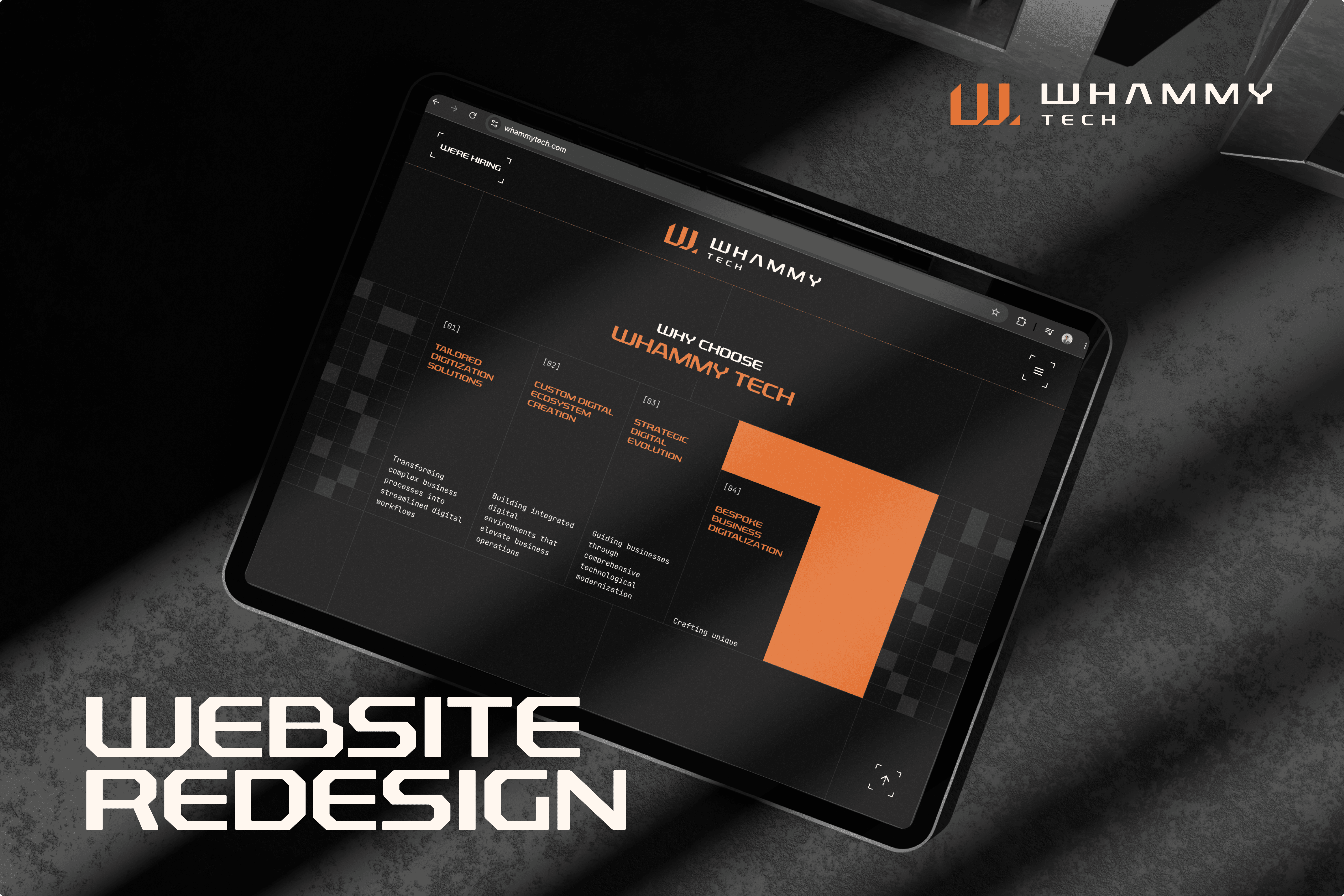
Whammy Tech is a technology service provider offering website, software, and digital system solutions. The project focused on redesigning the company website from a fragmented multi-page structure into a clearer, more linear one-page experience.
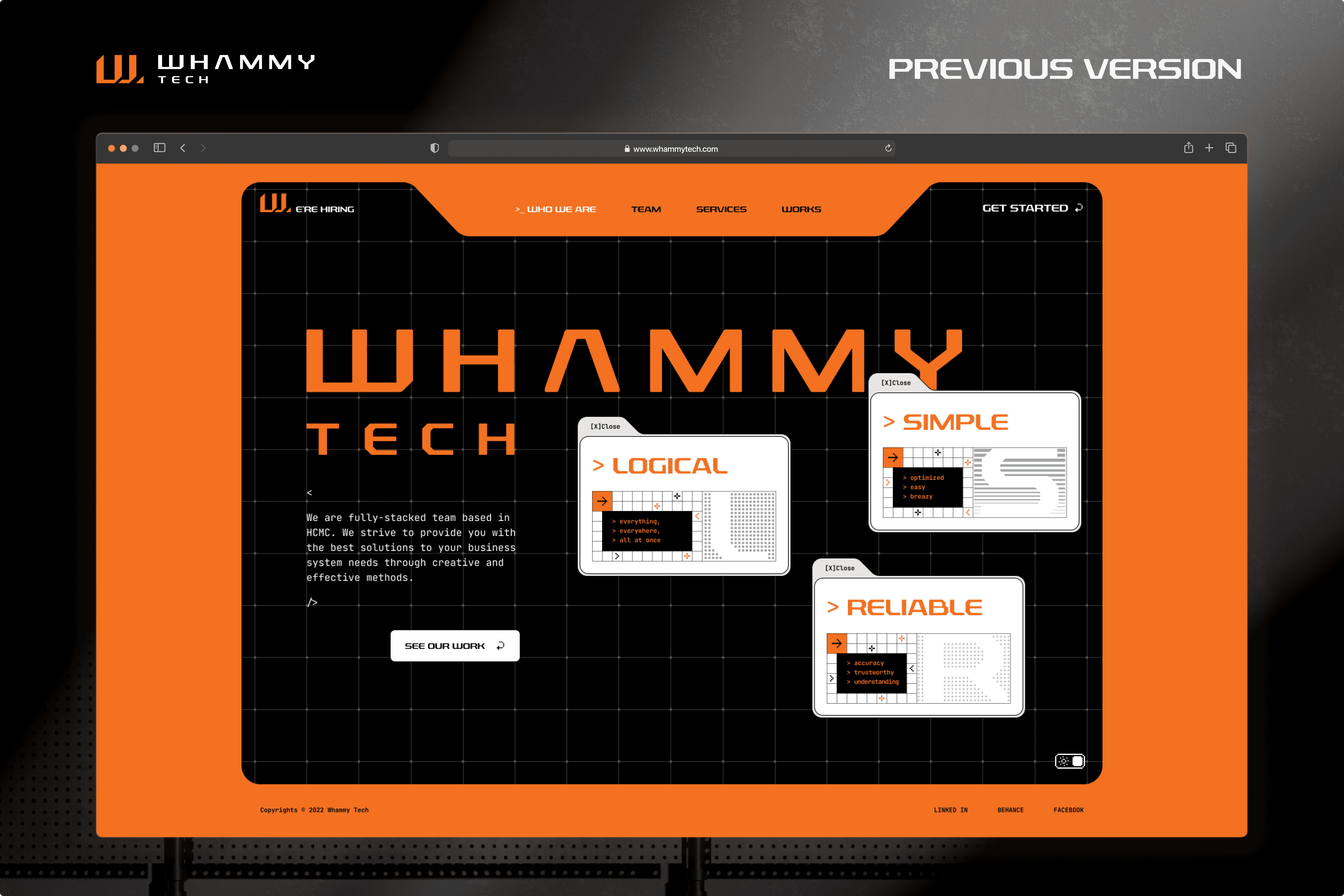
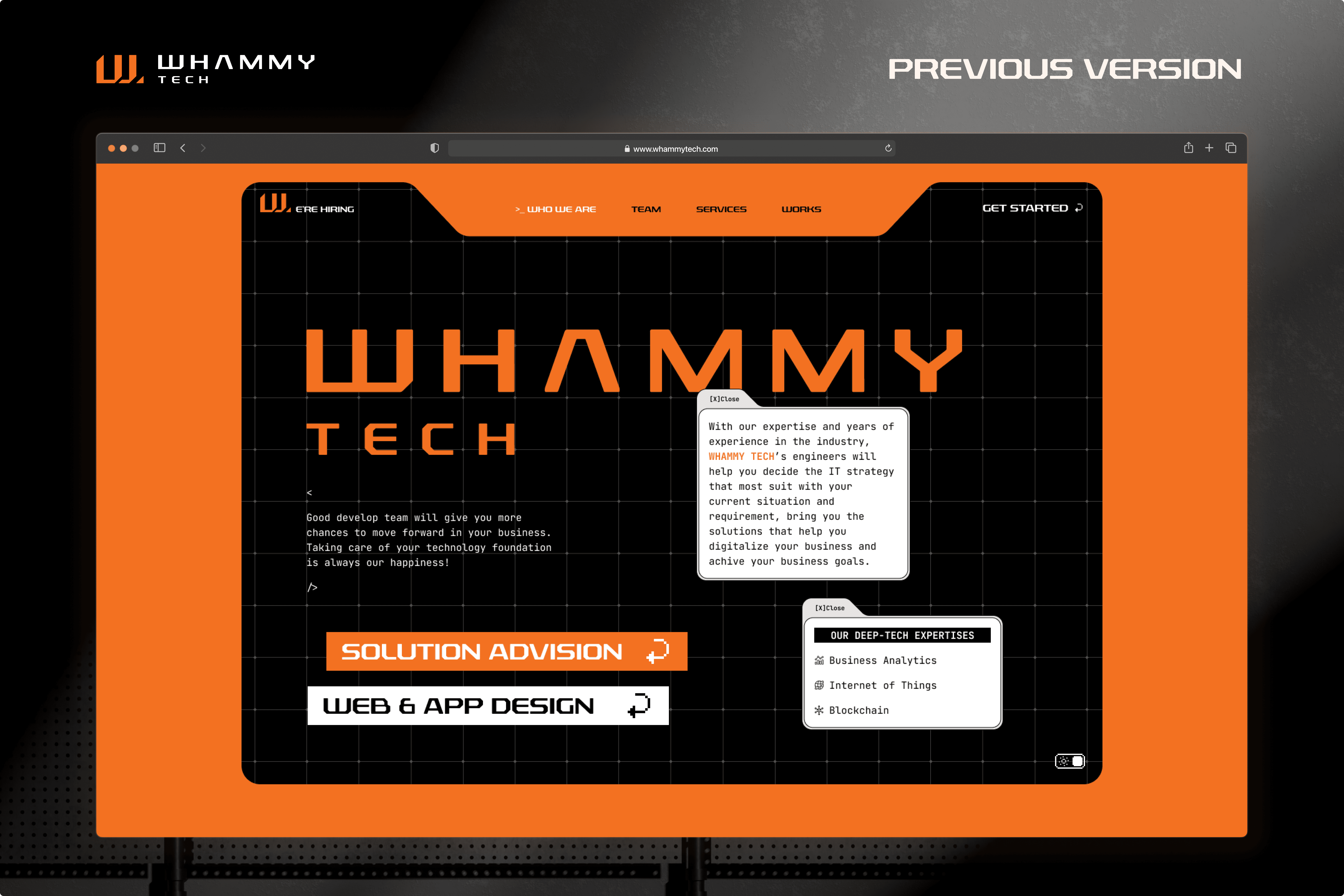
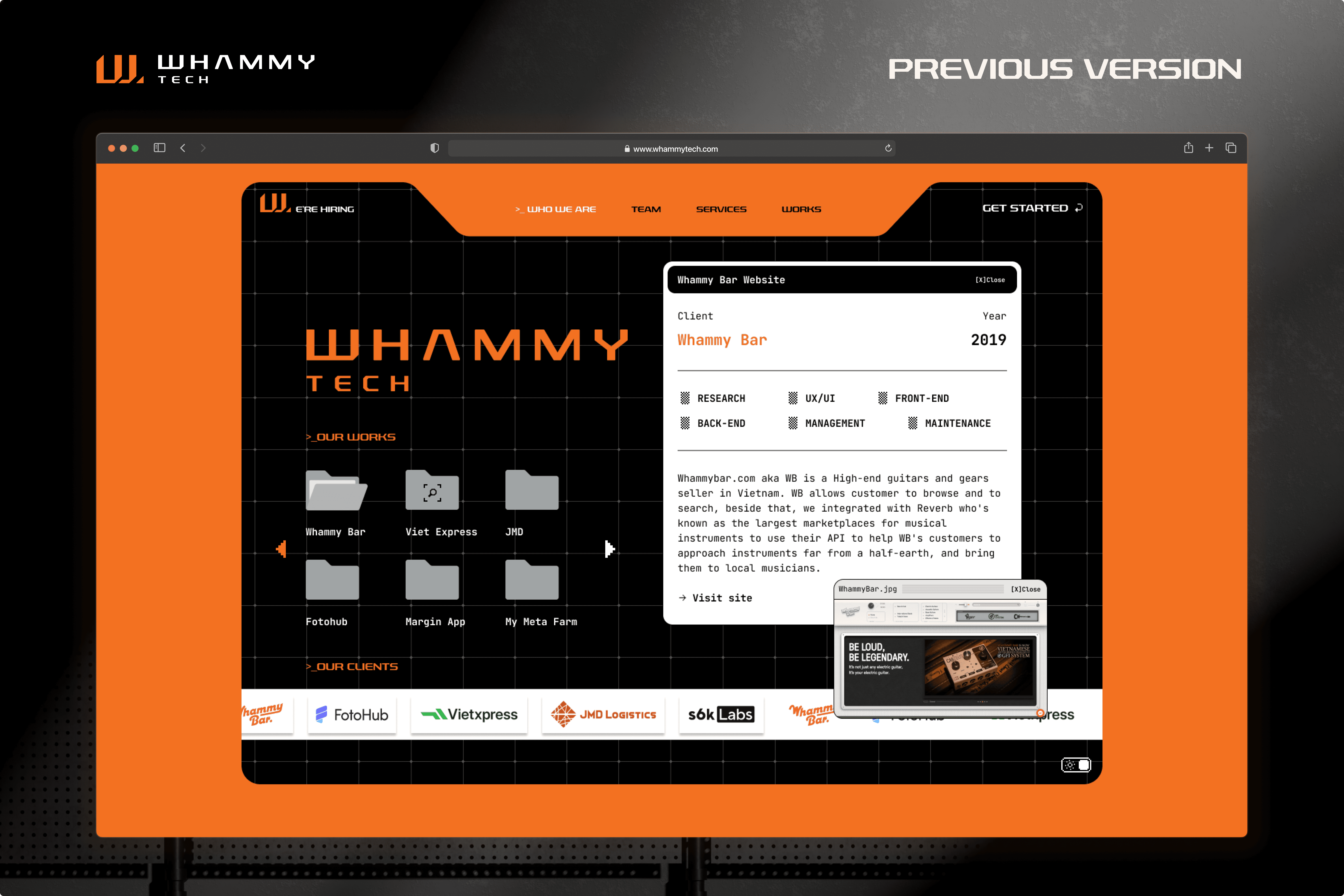
The previous version used a fixed screen layout, which limited the amount of information visible at once. As a result, content was divided into many small pages, making the browsing flow feel interrupted and less efficient. The redesign aimed to improve information hierarchy, navigation, and content readability while keeping the visual identity aligned with Whammy Tech’s bold, technical, and digital-first character.
Project Scope
Landing page redesign
Previous website analysis
Information architecture restructuring
One-page navigation system
Responsive layout direction
Visual identity refinement
UI consistency and component arrangement
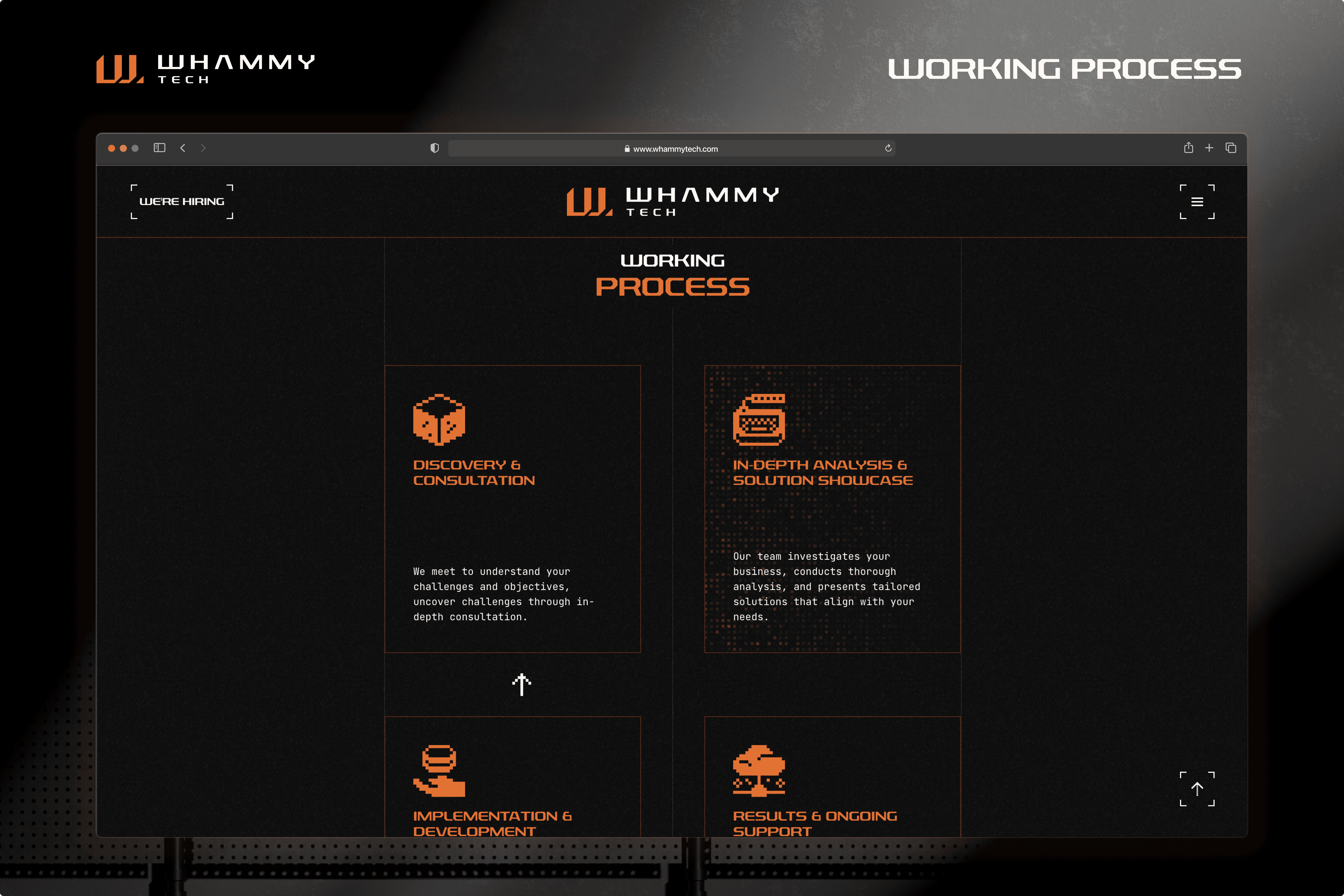
Working Process
Competitive research → Ideating → Wireframing → High-fidelity UI in Figma → Prototyping → Technical testing
Objectives
The project aimed to:
Transform fragmented content into a linear one-page browsing experience
Improve how users understand Whammy Tech’s services, workflow, and credibility
Reduce unnecessary page switching caused by the old fixed-screen structure
Create a smoother narrative flow from introduction → services → process → proof → contact
Maintain a strong technical visual language while improving usability
Previous Design Analysis
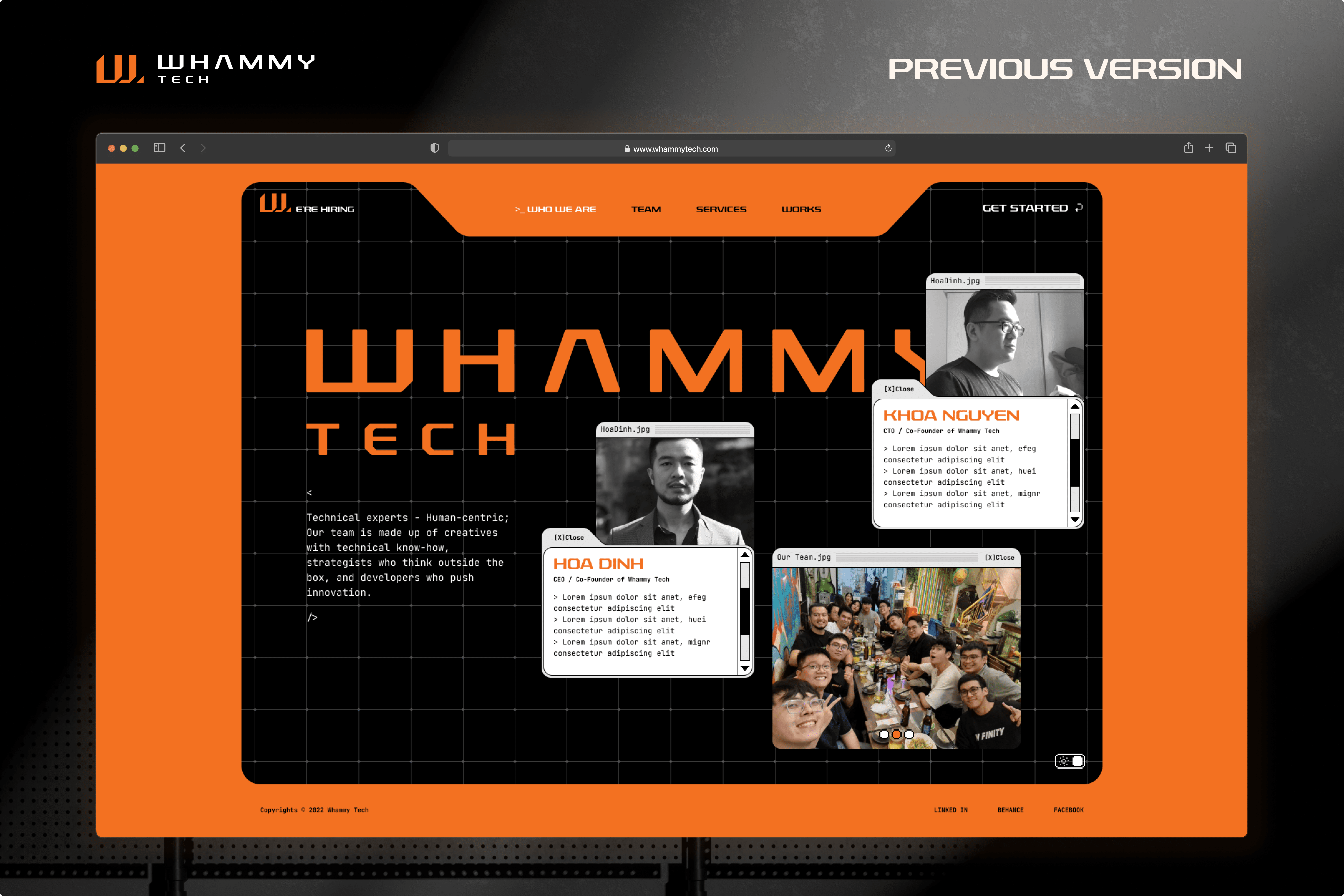
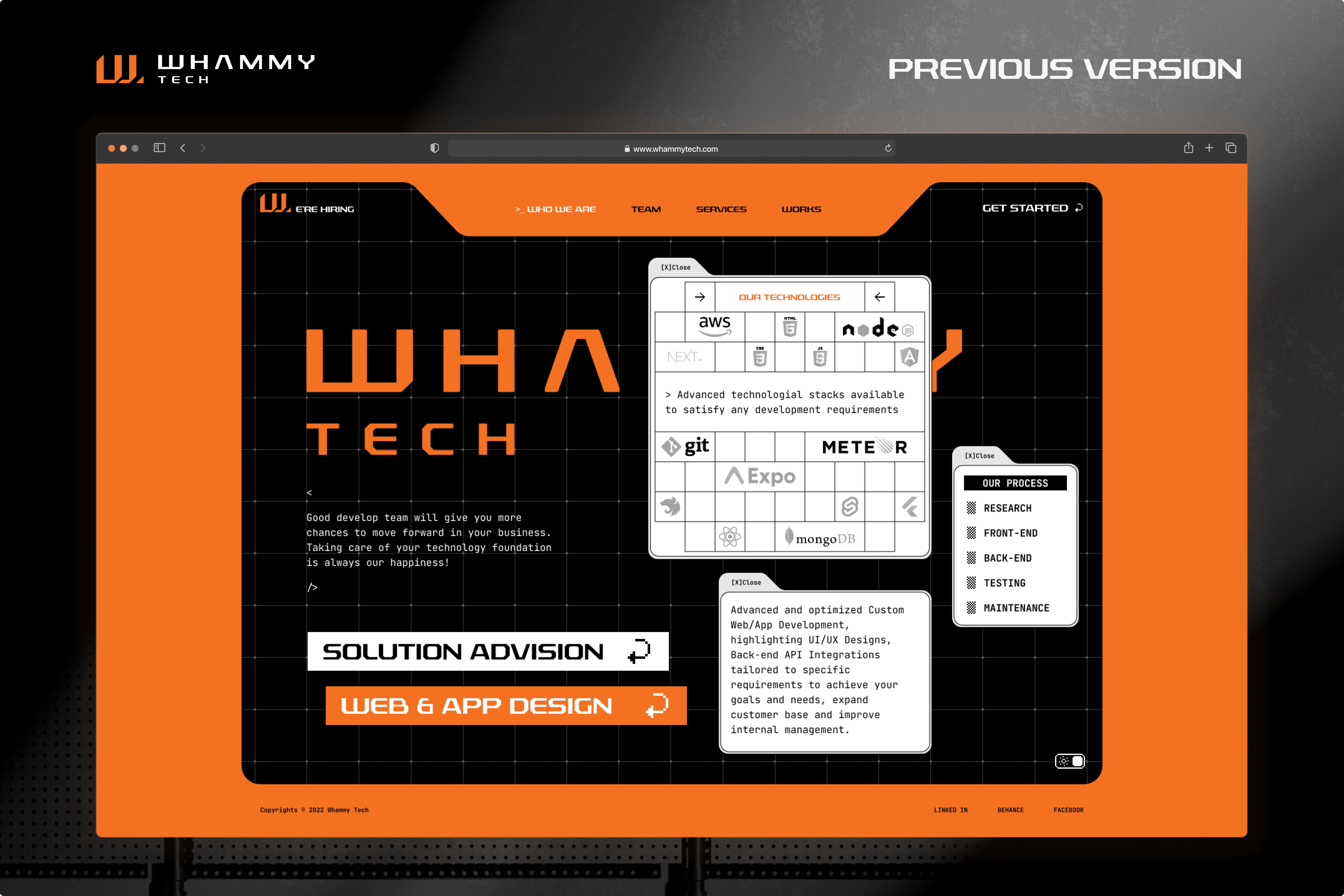
The old website used a fixed-size screen system. Each section worked almost like a separate slide or small page, which created a strong visual impression but limited the amount of content that could be shown at once.
Because of this limitation, information had to be split across multiple small screens. Users needed to move through many pages to understand the company’s services, process, and project value. This made the experience feel visually interesting but less practical for business communication.
Key Problems
Limited space for explaining services and company information
Content was fragmented across too many small pages
Users had to click or navigate repeatedly to get basic information
The hierarchy between brand message, services, workflow, and CTA was unclear
Visual style was strong, but the browsing flow lacked continuity
Design Insight
The main insight was that Whammy Tech needed a website that behaved less like a series of separate screens and more like a guided product story.
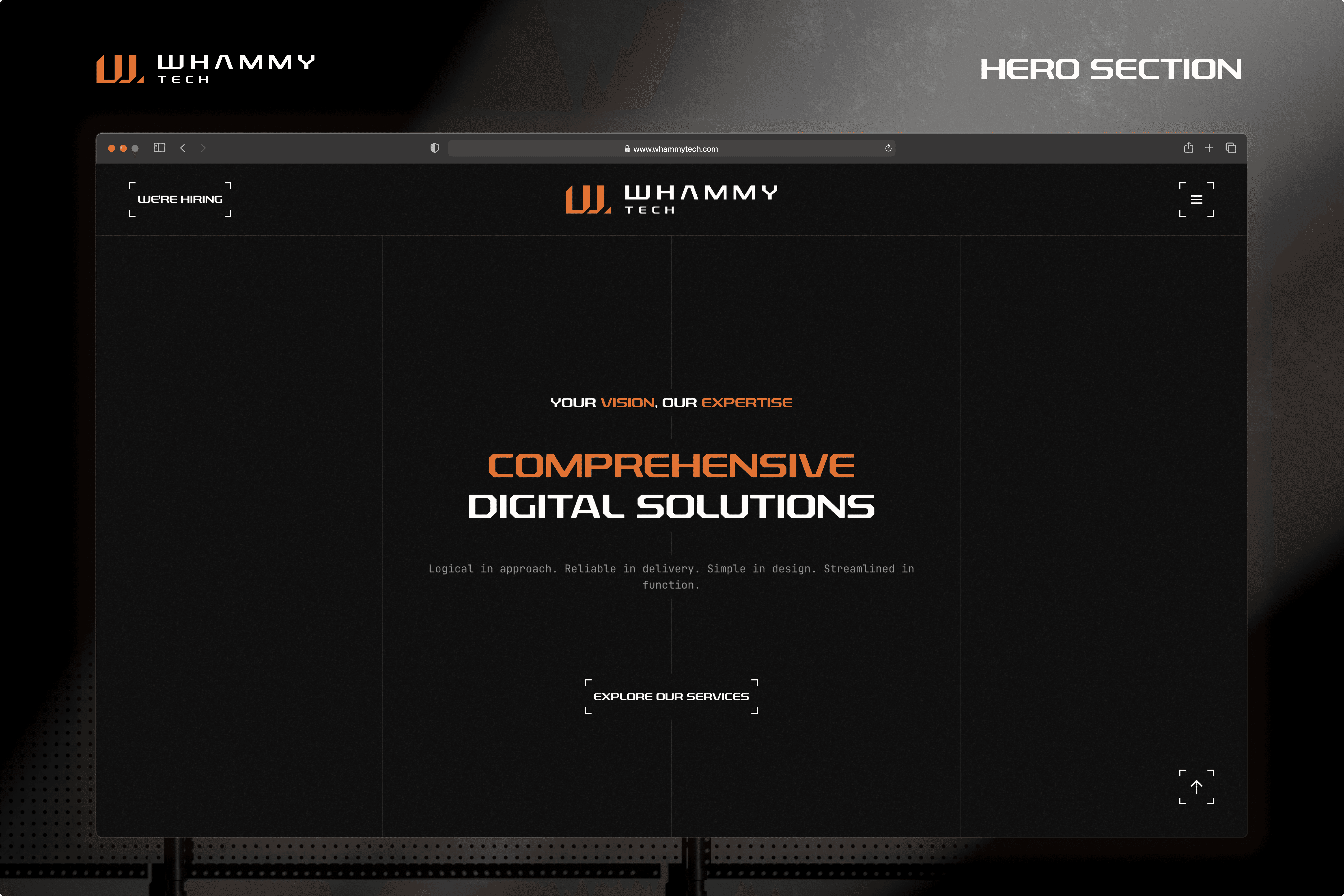
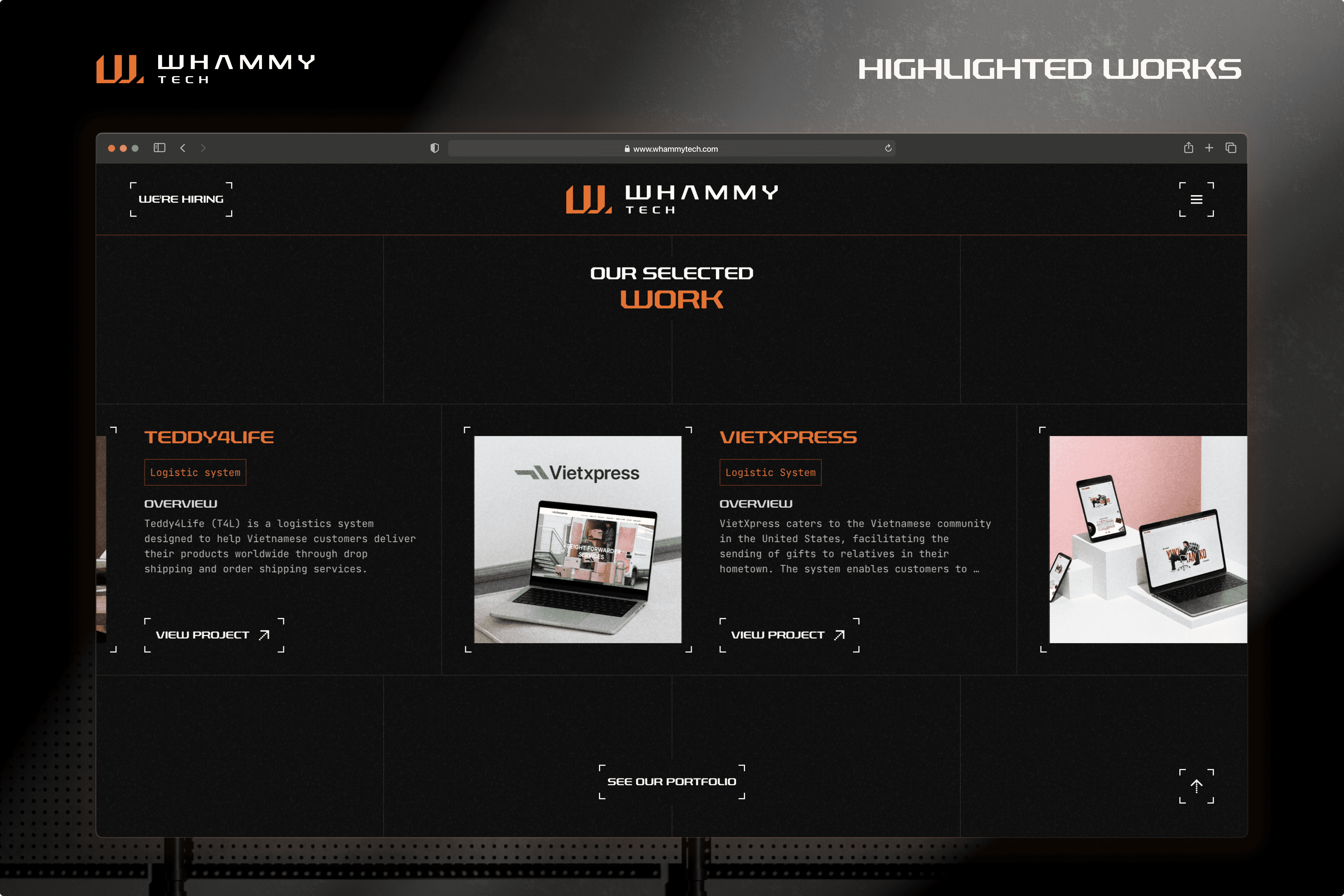
Instead of forcing users to explore many small pages, the redesign uses a linear one-page structure. This allows users to scroll naturally through the content, understand the company step by step, and reach the contact point with less friction.
The one-page approach also helps solve the fixed-screen problem by giving each section a clear role while keeping the experience continuous and easy to follow.
Landing Page
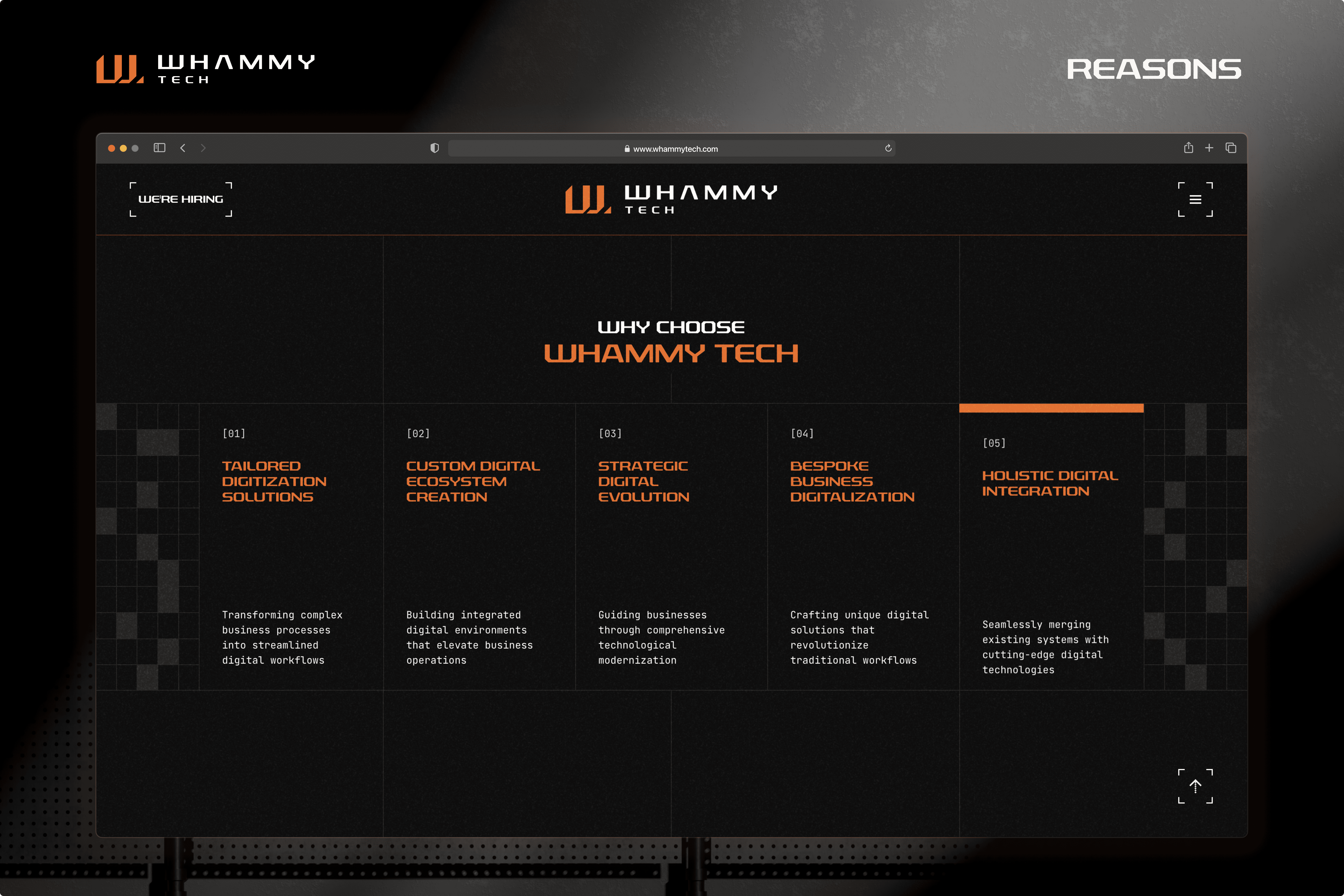
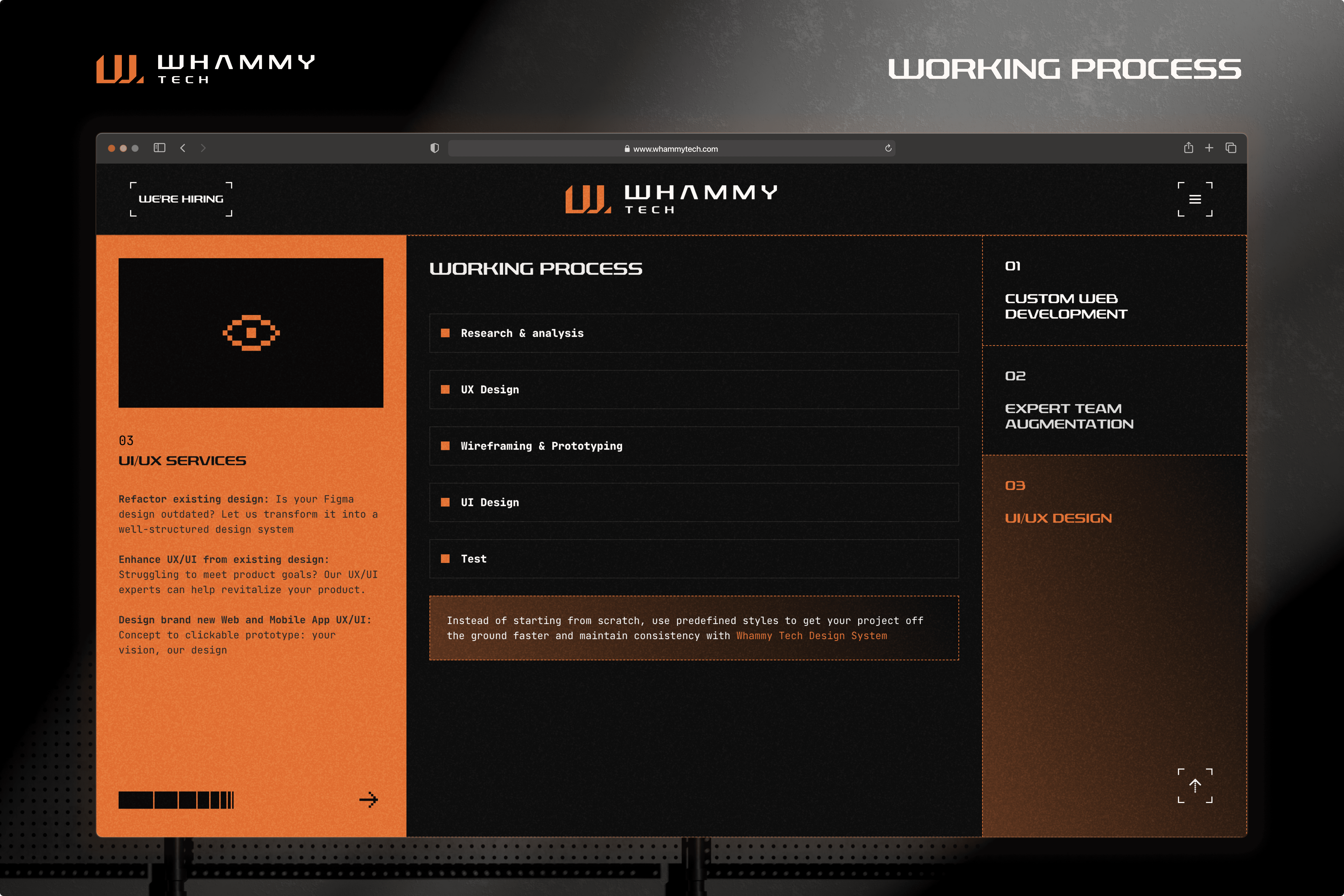
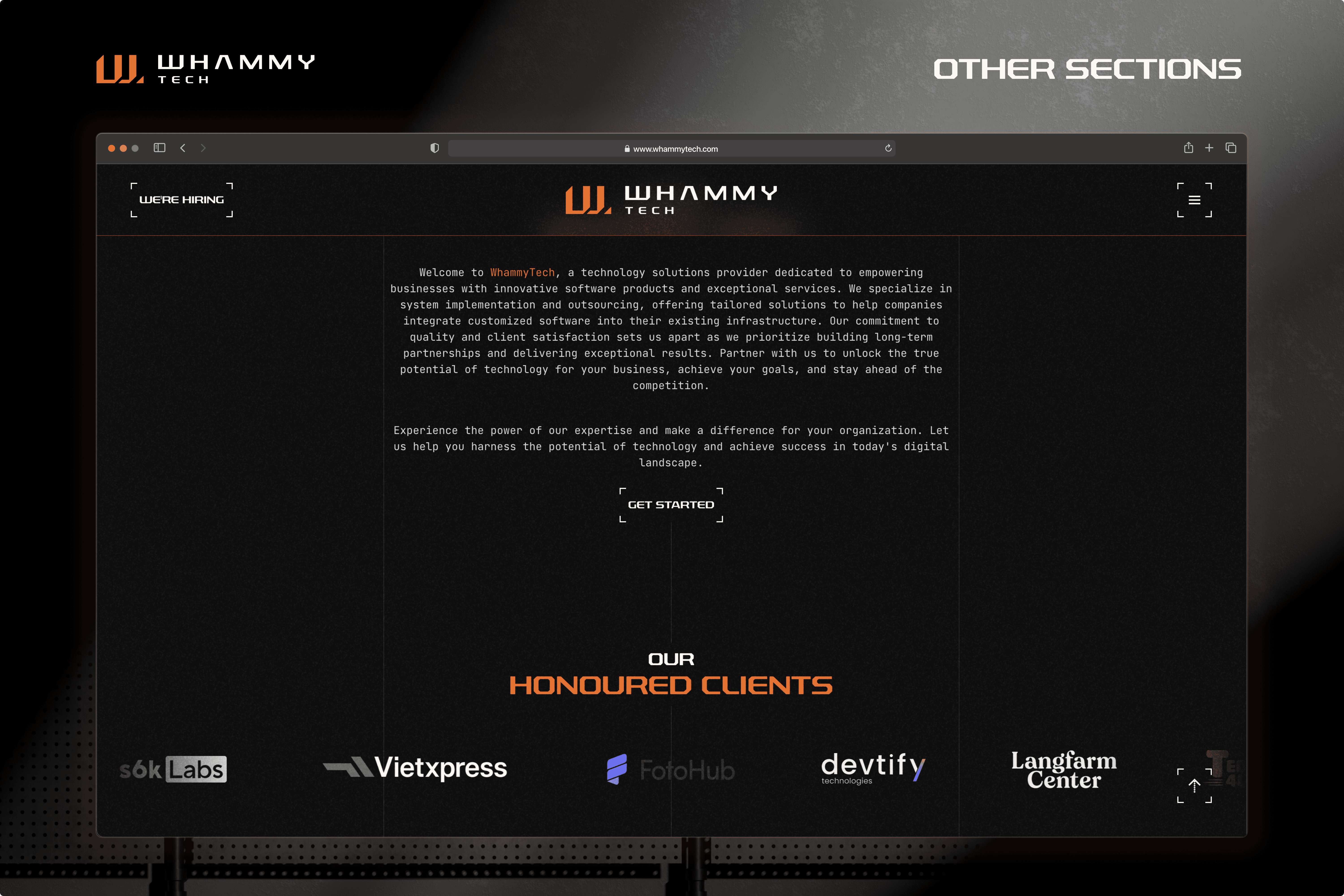
The landing page became the main entry point for the entire website experience. Instead of only acting as an introduction, it now works as a complete content flow that guides users through Whammy Tech’s identity, services, process, and contact information.
Information Setup
The content was reorganised to support quick understanding. Each section was designed with a specific communication purpose, so users could scan the page easily without feeling lost.
Web Building Flow
The redesign follows a more practical website flow:
Brand awareness → Service understanding → Trust building → Action
This flow helps users move naturally from curiosity to decision-making. Instead of jumping between different pages, users can follow a single scroll-based path and still access all key information.
Outcome
The final redesign creates a more coherent and usable website experience for Whammy Tech. It keeps the original technical and bold visual direction, but improves the way information is structured and delivered.
The website now works not only as a visual identity showcase, but also as a practical communication tool that helps users understand the company’s services, workflow, and collaboration process more efficiently.